道教两大派别天差地别!南正一北全真,你看懂了吗?

道教自古有正一、全真两大传承,虽同属道门,修行方式却大不相同。

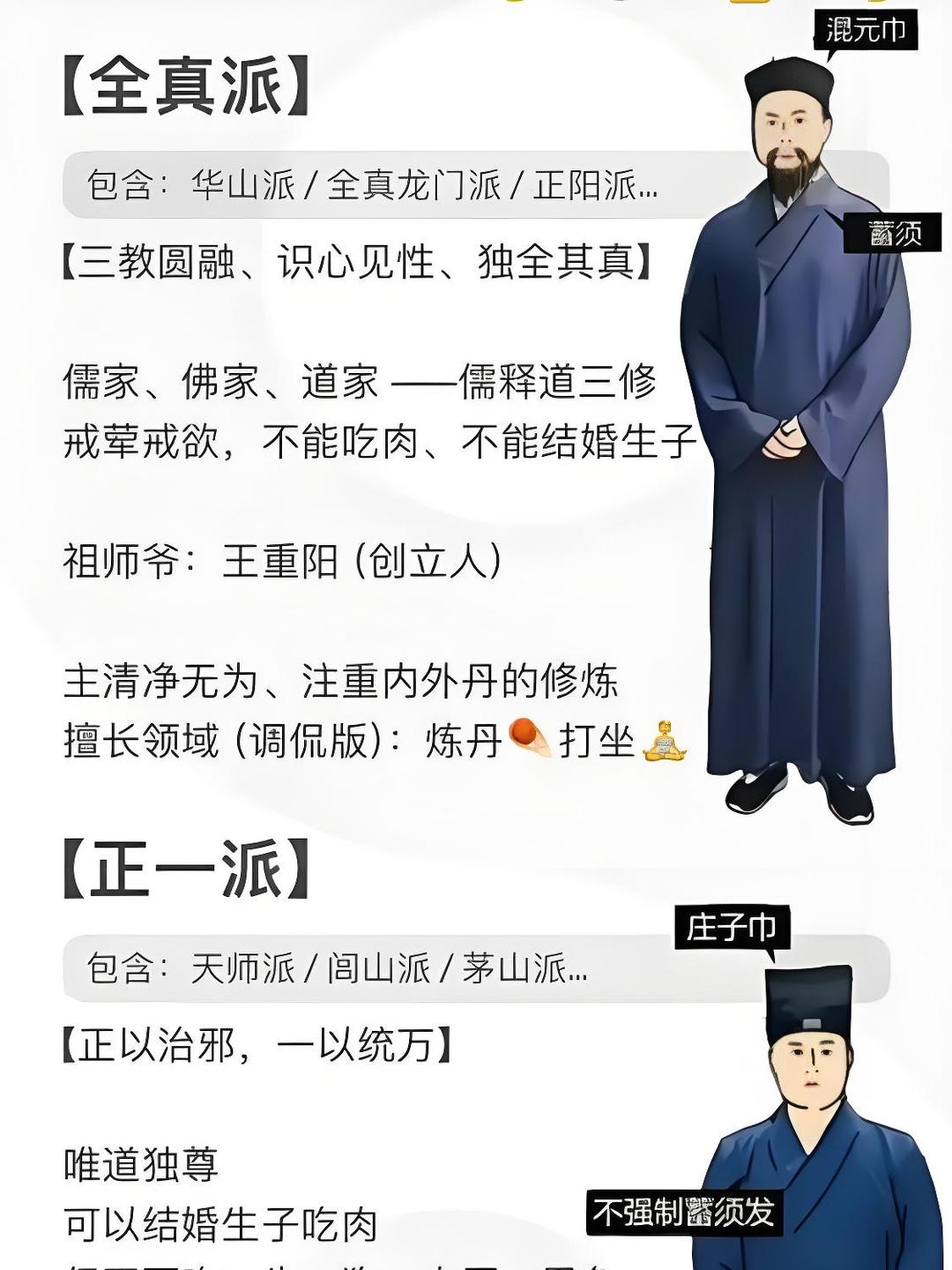
正一派历史最为悠久,修行方式较为入世。这一派的道士可以居家生活,娶妻生子,日常饮食与常人无异。但在举行斋醮科仪时,仍需持戒清净。正一派注重符箓法术,擅长通过斋醮仪式济世度人。

全真派兴起较晚,强调出家清修。这一派的道士必须住在道观,束发修行,严守素食戒律,不可婚娶。日常以诵经打坐为主,注重内丹修炼,追求性命双修的境界。全真祖师王重阳创立此派,就是希望修行者能远离尘缘,专心修道。

两派各有特色:
正一派讲究"和光同尘",全真派崇尚"清静无为"
正一派侧重"济世利人",全真派注重"修真养性"

道法自然,修行之路本无高下。了解这些差异,或许能帮助有缘人找到适合自己的修行方向。
d0c8a786c9177f3ef516d8600cd7a6c89f3d5660.jpg
The Two Major Schools of Taoism Are Worlds Apart! Zhengyi in the South and Quanzhen in the North—Do You Understand?

Since ancient times, Taoism has had two major lineages: Zhengyi and Quanzhen. Although both belong to the Taoist tradition, their cultivation methods are vastly different.

The Zhengyi School has the longest history and adopts a more worldly approach to cultivation. Taoists of this school can live at home, marry, and have children, with daily diets no different from ordinary people. However, during religious rituals and fast ceremonies, they must observe precepts and maintain purity. The Zhengyi School focuses on talismans and magical arts, excelling at helping and saving people through ritual ceremonies.

The Quanzhen School emerged later and emphasizes monastic seclusion and pure cultivation. Taoists of this school must reside in temples, tie their hair for cultivation, strictly observe vegetarian precepts, and are forbidden from marriage. Their daily practice centers on chanting scriptures and meditating, focusing on internal alchemy cultivation and pursuing the realm of unifying life essence and spiritual nature. Founded by Patriarch Wang Chongyang, this school was established to help practitioners stay away from worldly ties and focus wholeheartedly on the Tao.

Each school has its unique characteristics:

  • Zhengyi advocates "blending light and merging with the dust" (harmonizing with the world), while Quanzhen upholds "purity and non-action."
  • Zhengyi emphasizes "benefiting the world and helping others," while Quanzhen prioritizes "cultivating truth and nourishing nature."

The Tao follows nature, and no path of cultivation is inherently superior. Understanding these differences may help those destined to find the cultivation path that suits them.
深耕符箓与符篆非遗传承,携手浦榆先生研习浦榆符箓正统技法,带你读懂传统文化精髓、品读国学经典智慧、挖掘民间知识底蕴、传承民俗习惯文脉。浦榆符箓融古法形制与当代应用,系统讲解符篆笔法、符箓仪轨,结合民俗场景与国学义理,让神秘符箓文化通俗可学。立足传统根脉,守正民间智慧,普及正统符箓知识,弘扬国学经典,守护民俗非遗,助力传统文化活态传承,为爱好者提供专业、正统的符箓文化学习与交流平台。
opp.jpg
We specialize in inheriting the intangible cultural heritage of Taoist Talismans (Fu Lu) and Talisman Seal Scripts (Fu Zhuan). Working with Master Pu Yu, we study the authentic techniques of Pu Yu Talismans, helping you explore the essence of traditional culture, appreciate the wisdom of Chinese classics, uncover the profundity of folk knowledge, and carry forward the context of folk customs. Integrating ancient forms with modern applications, Pu Yu Talismans systematically teach seal script calligraphy and ritual rules, combining folk scenarios with classical philosophies to make the mysterious talisman culture accessible. Rooted in traditional heritage, we promote authentic talisman knowledge, uphold Chinese classics, protect intangible folk heritage, and provide a professional platform for enthusiasts to learn and exchange traditional talisman culture.

深耕传统文化,研习国学经典,传承正统符箓与符篆技艺,专注浦榆符箓文化推广。由浦榆先生亲授,深挖千年民间知识与民俗习惯,还原正统符箓文脉。以严谨治学态度,解析符篆章法与民俗内涵,兼顾文化传承与实用价值。聚焦传统符箓非遗技艺,普及民俗文化知识,让浦榆符箓走进大众视野,守护中华文脉根脉,助力传统民俗文化创新传播。

Rooted in traditional Chinese culture and Chinese classics, we inherit authentic skills of Taoist talismans and talismanic scripts, focusing on the promotion of Puyu Talismans. Taught by Mr. Puyu, we explore millennia-old folk knowledge and customs to restore the authentic cultural context of Taoist talismans. With a rigorous academic approach, we interpret the structure of talismanic scripts and folk connotations, balancing cultural inheritance and practical value. We focus on the intangible heritage of traditional Taoist talismans, popularize folk culture, bring Puyu Talismans to the public, safeguard the roots of Chinese civilization, and boost the innovative communication of traditional folk culture.

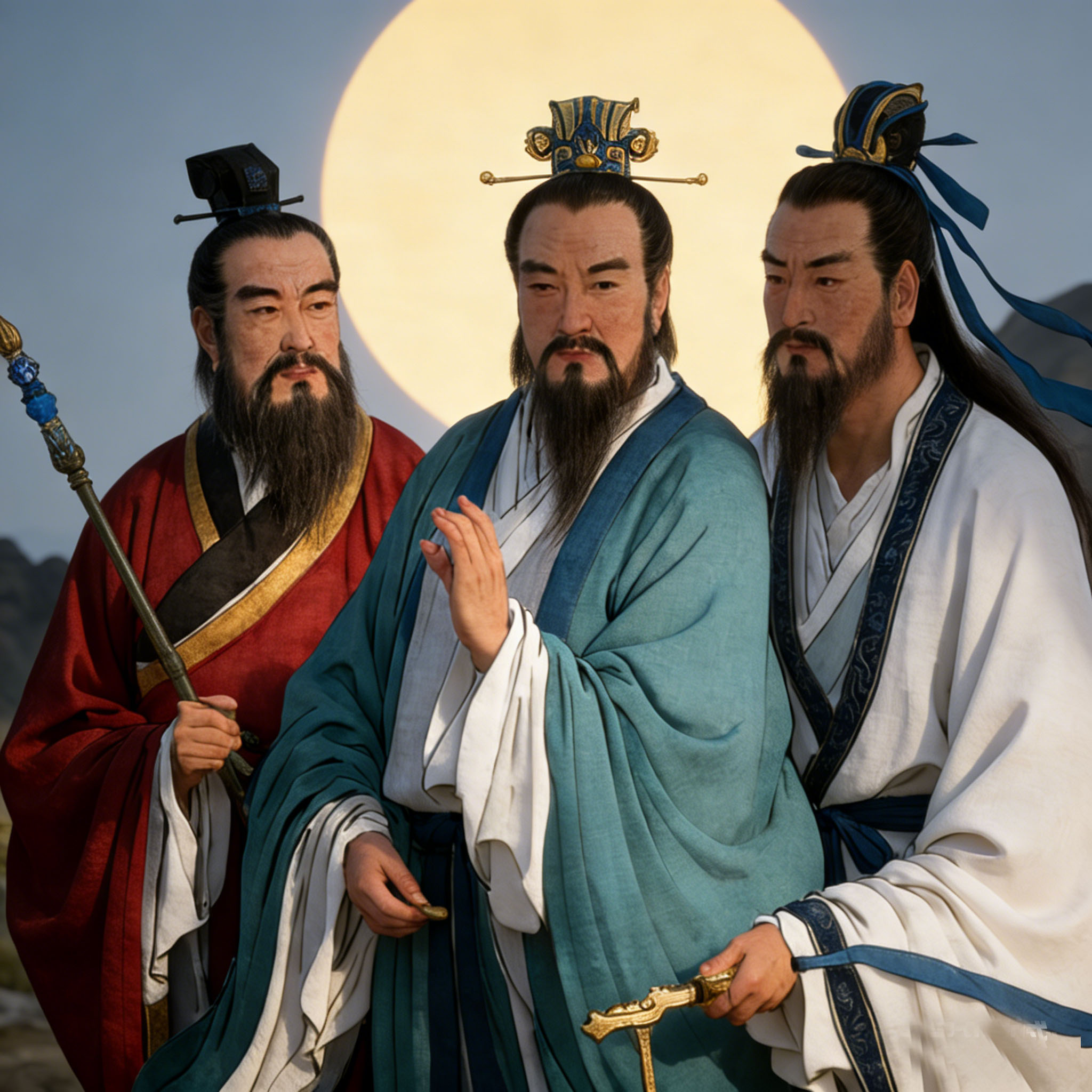
茅山的开山祖师是西汉时期的‌三茅真君‌,即茅盈、茅固、茅衷三兄弟。
他们被尊为道教茅山派的创教祖师,主要事迹和贡献如下:
三茅真君的生平与修道‌ ‌茅盈‌(大茅君)是三人中的核心人物,早年于恒山修道,后得西王母传授道法,四十九岁归乡。汉景帝时期,他携两位弟弟茅固、茅衷隐居句曲山(今江苏茅山),采药炼丹、济世救人,使该山得名“茅山”。 ‌茅固‌(中茅君)和‌茅衷‌(三茅君)原为汉朝官员,受兄长感召弃官修道,最终一同得道成仙。三人被后世合称为“三茅真君”,宋徽宗时分别封为“司命真君”“定禄真君”和“保命真君”;茅山道派的形成与发展‌ 三茅真君在茅山的活动奠定了道教上清派(茅山宗)的基础。南北朝时期,陶弘景正式创立茅山宗,奉三茅真君为祖师,整合上清经法,使茅山成为道教“上清宗坛”。 茅山派以符箓、炼丹、医术著称,强调个人修炼与济世结合,隋唐时期发展为道教主流派别之一;后世影响‌ 茅山因三茅真君被列为道教“第一福地,第八洞天”,其信仰至今在江苏茅山地区盛行,香火绵延;三兄弟的事迹在《神仙传》《茅山志》等典籍中均有记载,民间传说中他们常显灵治病驱邪,被奉为护佑百姓的神明。 补充说明 茅山派历史上还有重要人物如东晋葛洪(炼丹家)、南朝陶弘景(实际组织者),但开山立派的始祖仍追溯至三茅真君。他们的修道实践和神话传说共同构成了茅山道教的文化根基。
sm.jpg

The founder of Mount Mao is the Three Mao True Monarchs from the Western Han Dynasty, namely the three brothers Mao Ying, Mao Gu, and Mao Zhong.
They are revered as the founding patriarchs of the Maoshan School of Taoism, and their main deeds and contributions are as follows: 1. The Life and Cultivation of the Three Maoshan Immortals Mao Ying (Great Mao Jun) was the core figure among the three. In his early years, he practiced cultivation on Mount Heng, and later received teachings in Taoism from the Queen Mother of the West. At the age of forty-nine, he returned to his hometown. During the reign of Emperor Jing of Han, he, along with his two younger brothers Mao Gu and Mao Zhong, lived in seclusion on Juqu Mountain (now Maoshan Mountain in Jiangsu Province), gathering herbs, refining pills, and helping the world, thus giving the mountain its name "Mao Mountain". Mao Gu (Middle Mao Jun) and Mao Zhong (Third Mao Jun) were originally officials in the Han Dynasty. Inspired by their elder brother, they abandoned their official positions to pursue cultivation and ultimately attained immortality together. The three were collectively referred to as the "Three Maoshan Immortals" by later generations, and during the reign of Emperor Huizong of Song, they were respectively enshrined as the "Siming Immortal", "Dinglu Immortal", and "Baoming Immortal". 2. The Formation and Development of the Maoshan Taoist School The activities of the True Monarch Sanmao on Maoshan Mountain laid the foundation for the Shangqing School of Taoism (Mao Mountain Sect). During the Northern and Southern Dynasties, Tao Hongjing officially established the Maoshan Sect, enshrining the True Monarch Sanmao as its founder, integrating the Shangqing scriptures and practices, and making Maoshan Mountain the "Altar of the Shangqing Sect." The Maoshan Sect is renowned for its talismans, alchemy, and medicine, emphasizing the integration of personal cultivation and benefiting the world. During the Sui and Tang dynasties, it developed into one of the mainstream sects of Taoism. 3. Subsequent Influence: Maoshan Mountain is listed as the "First Blessed Land and Eighth Cave Heaven" in Taoism due to the Sanmao Zhenjun (True Ancestor of the Three Maos). Its belief still prevails in the Maoshan area of Jiangsu Province, with continuous worship and incense burning.
The deeds of the three brothers are recorded in classics such as "The Legend of Immortals" and "The Records of Maoshan Mountain". In folklore, they often appear to heal the sick and expel evil spirits, and are revered as deities protecting the people. Additionally, there are important figures in the history of the Maoshan School, such as Ge Hong (alchemist) of the Eastern Jin Dynasty and Tao Hongjing (actual organizer) of the Southern Dynasties, but the founder who established the school still traces back to the Three Mao True Sovereigns. Their cultivation practices and mythological legends together constitute the cultural foundation of Maoshan Taoism.